
Do you ever get a strange, tingling sensation when you bite into a banana, fruit, or food, while everyone else seems to enjoy it just fine? Or maybe certain seasons or new environments leave you with a runny nose, itchy eyes, or sneezing fits? Worse yet, are there mornings when you wake up with a swollen face or gooey eyes for no apparent reason?
If you nodded yes to any of these, there’s a good chance allergies might be behind it.
But don’t worry– it’s nothing to stress about. With a simple and safe procedure like allergy testing, you can finally pinpoint the exact cause of your symptoms and get a clear roadmap for managing or even preventing them.
In this blog, we’ll walk you through how allergy testing works, the different types of tests available, how to prepare, and what to expect before, during, and after the process.
Let’s start with understanding the basics.
What is an Allergy: Brief Overview
An allergy is your immune system’s overreaction to substances that are typically harmless to most people. These substances, called allergens, can be found in everyday environments, including pollen, dust mites, pets, insects, mould, certain foods, and medications.
In people with a genetic tendency toward allergies (a condition known as atopy), exposure to these allergens can trigger an immune response that leads to inflammation. This allergic inflammation can show up in different parts of the body, such as:
- Nose and eyes – causing sneezing, congestion, and watery eyes (allergic rhinitis or conjunctivitis)
- Skin – resulting in eczema or hives (urticaria)
- Lungs – leading to asthma-like symptoms such as wheezing and shortness of breath
During an allergic reaction, your immune system mistakenly identifies the allergen as a threat. It produces IgE (Immunoglobulin E- antibodies that attach to mast cells, releasing histamine, a chemical that causes irritation and inflammation). This process leads to the uncomfortable symptoms associated with allergies.
It’s worth noting that not all adverse reactions involve the immune system. Although reactions to food additives or certain chemicals may cause discomfort, they are classified as adverse reactions, not true allergies.
As of 2023, an estimated 50 million people in the United States experience allergies yearly. That’s roughly 30% of adults and 40% of children, making allergies one of the most common chronic conditions nationwide.
Now, how do you identify whether you should get signed up for an allergy test or not? It’s simple; we’ve elaborated in the next section.
When Is Allergy Testing Recommended?

- Frequent sneezing, nasal congestion, or itchy eyes (Hay fever)
- Asthma symptoms triggered by allergens
- Recurring skin issues like eczema, hives, or rashes
- Reactions to certain foods (tingling, swelling, stomach issues)
- History of unexplained anaphylaxis
- Concerns about insect stings or medication allergies (e.g., penicillin)
Identifying the exact allergen helps you and your healthcare provider develop an effective plan, including avoiding certain substances, taking medications, or undergoing allergy immunotherapy. Ready to take control of your symptoms? Schedule your allergy test with Specialty Primary Care & Wellness today and take the first step toward breathing easier, feeling better, and living allergy-free.
How Does Allergy Testing Work? Everything You Need to Know
Allergy testing is a medical procedure used to determine if your immune system reacts abnormally to certain substances, known as allergens. These reactions occur when your body overreacts to harmless substances by producing Immunoglobulin E (IgE) antibodies, triggering symptoms like sneezing, swelling, rashes, and more.
There are two primary types of allergy tests:
- Allergy Skin Tests: These involve exposing your skin to allergens.
- Allergy Blood Tests: These detect IgE antibodies in your bloodstream.
Let’s examine the essential differences between allergy skin and blood tests to better understand which option might be right for you.
Types of Allergy Tests
1. Skin Prick Test (Scratch Test)

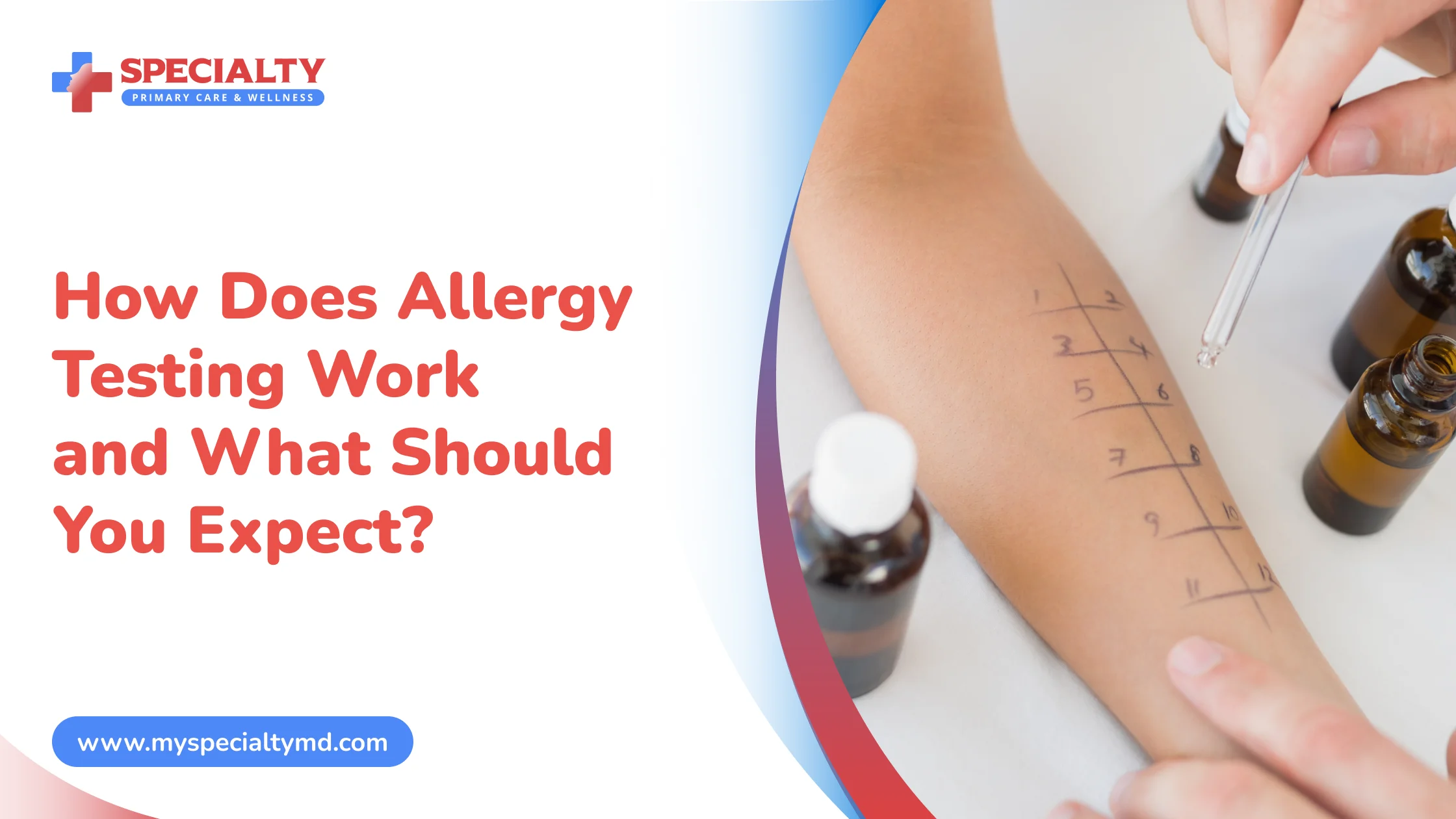
The most common allergy test involves placing small amounts of potential allergens on your skin, usually your forearm or back, and then pricking with a sterile lancet.
What to expect?
- You may be tested for up to 50 substances at once.
- If you’re allergic to a substance, you’ll develop a red, raised bump (wheal) that looks like a mosquito bite within 15–20 minutes.
- Histamine is used as a control substance to check skin reactivity.
Ideal for diagnosing: Pollen, dust mites, mold, pet dander, insect venom, and some food allergies.
This procedure is generally painless, with only mild discomfort or itching at the site.
2. Intradermal Test

Using a fine needle, this procedure injects a small amount of allergen beneath the skin surface.
When is it used?
- When a skin prick test is negative, but an allergy is still suspected.
- For more specific allergens, like penicillin or insect venom.
What to expect?
- A more sensitive test than the skin prick.
- A reaction (wheal) typically forms within 15 minutes if you’re allergic.
Important note: This test carries a slightly higher risk of a severe reaction and should be performed under medical supervision.
3. Patch Test

This test checks for delayed allergic reactions. Patches with allergens are taped to your back and left in place for 48 hours.
What does it identify?
Substances causing contact dermatitis include latex, metals (e.g., nickel), fragrances, hair dyes, and preservatives.
What to expect?
- You’ll return to the clinic after 48–96 hours for evaluation.
- Mild itching or irritation may occur.
- Avoid sweating or bathing during the test period.
4. Allergy Blood Test (Specific IgE Test)

In this test, your blood sample is drawn to measure the level of IgE antibodies to specific allergens.
Best for: People who–
- Can’t stop taking antihistamines.
- Have skin conditions like eczema or psoriasis.
- Have had a severe allergic reaction in the past (risk of anaphylaxis).
- Have darker skin tones that may affect skin test visibility.
What to expect?
- No special preparation is needed.
- Blood is drawn from a vein, similar to any other lab test.
- Results usually take a few days.
The above procedures help you figure out the kind of allergic reaction you’re dealing with. If you’re someone getting this test done for the very first time and are unsure about how allergy testing works, don’t worry, the section above has got you covered. And to stay one step ahead, just follow the instructions below to prep for your test.
How to Prepare for Allergy Testing
Before any allergy test, your provider will ask about:
- Your symptoms and how often they occur.
- Your family and personal medical history.
- Any medications or supplements you’re currently taking?
Furthermore, to make sure your results are accurate, there are certain medications you’ll want to avoid before undergoing a skin test. These can interfere with the outcome, so pausing them as advised is important. Here’s a quick list of what to watch out for:
- Antihistamines (e.g., loratadine, cetirizine, diphenhydramine)
- Tricyclic antidepressants (e.g., nortriptyline)
- Heartburn medications (e.g., ranitidine, cimetidine)
- Certain asthma medications (e.g., omalizumab)
Always consult your healthcare provider before stopping any medication.
Risks of Allergy Testing
Allergy testing is generally safe, but may cause:
- Mild itching, redness, or swelling at the test site.
- Delayed skin reactions that last a few days.
- Rarely, a severe reaction (anaphylaxis) requires emergency care, especially with intradermal testing.
That’s why all tests should be conducted in a medical facility equipped for emergencies.
Suppose you’ve just received your first allergy test results, but are unsure what they mean? The following section breaks it down for you and makes interpretation much easier.
Understanding Your Results & Taking the Next Steps
| Positive Test | Negative Test |
| Likely allergic to the substanceLarger wheal = higher sensitivity False positives are possible | Unlikely allergic False negatives can occur (e.g., due to meds or weak allergen sample) |
Based on your results, the healthcare provider may recommend:
- Avoidance strategies: Reducing exposure to allergens (like switching detergents, removing carpets, or adjusting your diet).
- Medications: Antihistamines, corticosteroids, or decongestants to control symptoms.
- Immunotherapy: Allergy shots or sublingual tablets to gradually reduce your sensitivity.
- Lifestyle changes: Using HEPA filters, bathing pets regularly, or changing bedding.
Getting tested for allergies and, more importantly, understanding allergy testing is imperative to protecting your health and the well-being of your loved ones. We always recommend getting tested sooner rather than later.
If you or someone close to you is experiencing unexplained allergic reactions or sudden flare-ups, it’s time to take action. That’s where our expert team at Specialty Primary Care & Wellness steps in to provide the right care, guidance, and relief when it matters most.
Prioritize Your Well-Being with Specialty Primary Care & Wellness

When symptoms strike, a seasonal cold, allergic flare-up, or something more serious, having a trusted primary care provider makes all the difference. At Specialty Primary Care & Wellness, we focus on proactive, year-round care to help you feel your best every day.
Our comprehensive services include:
- Annual Physical & GYN Exams
- Women’s & Men’s Health
- Allergy & Immunization Management
- Thyroid & Hypertension Support
- Anxiety, Depression & Sexual Health Care
- Weight Loss & Preventive Screenings & more…
📅 Schedule your appointment today and take the first step toward complete wellness.


